
Capabilities
Road Infrastructure
Highway platforms, divided roads, transport links, and supporting roadway civil works.
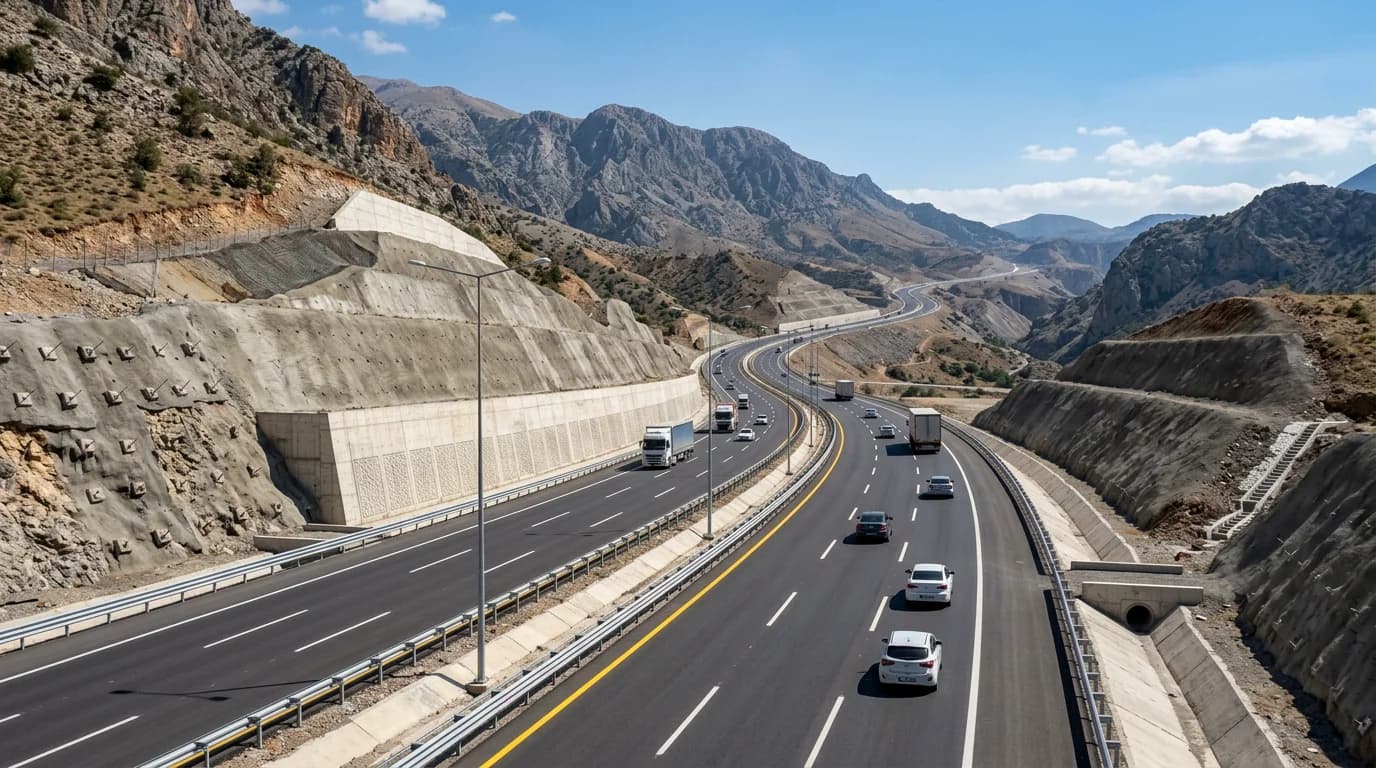
Road infrastructure is a core driver of economic activity, regional access, logistics, and social mobility. Arma Infrastructure frames this capability around the delivery of highway construction, transport corridors, and roadway civil systems designed for safety, durability, and operational efficiency.
This capability includes road platform works, divided road construction, pavement-supporting systems, and field execution processes guided by disciplined engineering, structural stability, and environmental awareness. The objective is to build reliable road networks that strengthen connectivity and long-term transport performance.
Modern road construction requires more than surface formation. It depends on stable substructure preparation, well-managed drainage, coordinated material placement, traffic-aware execution, and the ability to maintain engineering standards throughout long project sequences. Arma Infrastructure presents itself with that wider operational perspective in mind.
The road infrastructure category is therefore positioned as a foundational civil discipline that supports trade, public access, local development, and efficient movement. By combining engineering control with long-life construction thinking, Arma Infrastructure aims to contribute to transport systems that remain dependable over time.